

Featurespace joins the 'Sunday Times' Hiscox Tech Track 100
Featurespace has been ranked among the Sunday Times Hiscox Tech Track 100 league table, which ranks Britain’s private technology, media and telecoms companies with the fastest-growing sales.
Featurespace has been ranked among the Sunday Times Hiscox Tech Track 100 league table, which ranks Britain’s private technology, media and telecoms companies with the fastest-growing sales.
The list, which was published in the Sunday Times yesterday (Sunday 9 September), ranks Featurespace as one of the fastest growing companies in the UK.
Featurespace, which has been ranked 85 in the list, is the World leading provider of Adaptive Behavioral Analytics software for fraud and risk management. Their innovative application of machine learning technology provides a holistic solution to tackle new and known fraud attacks and is now protecting customer transactions for some of the largest banks, payment processors and companies across the world.
The 2018 Tech Track 100 companies overall achieved average sales growth over three years of 101% a year to reach a combined total of £3.3bn. They employ 19,300 staff, having added 14,000 employees to their combined workforce over the period.
Featurespace is one of just five companies headquartered in Cambridgeshire (compared to six last year) to make the list. Between them, they have grown their sales by an average of 105% a year over three years to a total of £138m, and together they now employ over 1,000 people.
This year Featurespace aims to increase it's workforce to meet rising customer demand, with more than 100 new positions in London and Cambridge UK, and Atlanta GA - the home of it's US headquarters which opened in late 2017.
Featurespace's fraud prevention software has won a number of exciting awards and nominations over the last 12 months, including The Queen's Award for Enterprise Innovation, The Women in IT Excellence Awards, FS Tech Awards - Anti-fraud Solution of the Year and a Gold Stevie at the American Business Awards. The company has also been ranked in the Deloitte Fast 50 two years running, as well as the FT100, Future Fifty, FinTech50 and European Business Awards 'Ones to Watch'.
To read more information, click here.
Featurespace™ is the world-leader in Adaptive Behavioural Analytics and creator of the ARIC™ platform, a machine learning software system developed out of the University of Cambridge.
Headquartered in Cambridge, UK, and Atlanta, US with additional offices in London, UK, and New York, US. Featurespace has deployed ARIC to organisations that have services or products deployed in over 180 countries.

Arecor secures £6m investment for clinical development of its diabetes portfolio
Arecor Ltd, the UK-based leader in developing superior biopharmaceuticals through the application of an innovative formulation technology platform, today announces that it has secured £6 million of investment from new and existing investors for the clinical development of the Company’s speciality pharma portfolio of proprietary diabetes products.
Arecor Ltd, the UK-based leader in developing superior biopharmaceuticals through the application of an innovative formulation technology platform, today announces that it has secured £6 million of investment from new and existing investors for the clinical development of the Company’s speciality pharma portfolio of proprietary diabetes products.
Investment will accelerate the delivery of significantly improved therapeutic treatments and quality of life for people living with diabetes
This £6 million equity investment into Arecor was led by leading UK institutional investors, Calculus Capital, Downing Ventures, and Albion Capital with significant participation from Arecor’s existing investors. BioScience Managers Limited, the international healthcare investment firm, advised Downing Ventures.
Arecor’s next-generation diabetes product pipeline represents exciting new progress in the field of diabetes that will enable important new treatment regimens and offer greater control of blood glucose to diabetes patients, which is key to improving outcomes and quality of life.
This pipeline includes:-
Proprietary formulations of insulin analogues that are ultra-rapid acting and more closely match a healthy body’s physiological response to blood glucose, leading to better blood glucose (sugar) control - currently a significant challenge
Highly concentrated rapid acting insulin optimised for the next generation of body-worn miniaturised delivery devices, including the artificial pancreas
Stable aqueous ready to use glucagon used in an emergency to treat severe hypoglycaemia and enabling future use in bi-hormonal artificial pancreas systems
These programmes will be progressed through development to demonstrate improved product profiles and health outcomes in human clinical trials. In addition to these clinical programmes, the investment will allow Arecor to progress its pre-clinical pipeline of diabetes combination products, as well as a range of additional superior biotherapeutics addressing critical unmet needs in key disease areas.
The management of diabetes is one of the major global health challenges. Indeed, the International Diabetes Federation (“IDF”) estimates that there are nearly half a billion (425 million) people currently living with diabetes around the world* and the IDF further estimates that if the global direct and indirect healthcare costs from diabetes are included, the economic impact of diabetes exceeds $1trillion**.
The improved products, therapeutic pathways and personalised control that Arecor’s products can enable, will make a significant contribution to addressing this challenge. Arecor will be taking its product portfolio into clinical development itself, however, the Company will ultimately look to partner with specialist diabetes companies for late stage clinical studies and global market access.
The Company, which was originally based on unique protein chemistry technology and insights spun out from Unilever, has refined and developed these into the ArestatTM formulation technology platform. This platform has been used extensively to improve the solution properties of numerous protein, anti-body, vaccine and peptide formulations both in collaboration with pharmaceutical partners, as well as for Arecor’s own pipeline. Arecor has established a proven track record in applying this technology platform to deliver superior biopharmaceutical product profiles across a broad range of therapeutic areas.
Dr Sarah Howell, Chief Executive Officer at Arecor, commented: “We are delighted to have secured the investment that we need to progress our lead diabetes programmes through the key stages of clinical development. With diabetes reaching epidemic proportions worldwide and with close to half a billion people living with the condition today, the opportunity of advancing our diabetes products into human clinical trials and their potential to significantly improve the treatment of this debilitating disease, represents a very exciting and ground-breaking proposition."
Alexander Crawford, Investment Director, Calculus Capital, added: “Arecor is applying its unique and highly regarded reformulation technology which will help transform the growing diabetes market. As lead investor, we believe this is an exciting new phase from Arecor in the development of their technology and strong growth potential.”
Dr Christoph Ruedig, Partner, Albion Capital, said: “We have followed Arecor for some time and are excited by the societal value of its fast onset, short duration action insulin. Its technology is highly differentiated and the Company is leading the sector in the area of stabilising liquid formulations for injectable drugs. We look forward to working with the strong leadership team to bring this extraordinary proposition to fruition and in doing so, aid many diabetic patients across the UK and beyond.”
Richard Lewis, Investment Director, Downing Ventures, concluded: “As an investment opportunity, Arecor combines a solid and high margin technology business alongside a proprietary product offering that fulfils major unmet medical need. As a result, we believe that the diabetes pipeline should successfully attract quality international commercial partners. “
* International Diabetes Federation. IDF Diabetes Atlas, 8th edition. International Diabetes Federation, 2017. Available at: http://www.diabetesatlas.org/
** Bommer C., Heesemann E., Sagalova V., et al. The global economic burden of diabetes in adults aged 20-79 years: a cost-of-illness study. Lancet Diabetes Endocrinol 2017; 5: 423-30.
About ArestatTM
Arecor has significant experience and a proven track record in applying the ArestatTM formulation technology platform to deliver superior biopharmaceutical product profiles across a broad range of proteins, peptides and vaccines.
About Arecor’s Patent Portfolio
Arecor’s technology is protected by 21 patent families, including 23 granted patents. Arecor has been exploiting its technology in partnerships with pharmaceutical companies, successfully developing superior product profiles, including stable high-concentration antibodies with low viscosity, reformulations of lyophilised or freeze-dried products into stable liquids or stable vaccines that can be used outside the cold chain.

Undo appoints Barry Morris as CEO to lead growth phase
Undo, a pioneer in the development of new software execution record and replay technology, has announced the appointment of Barry Morris as its new CEO with immediate effect.
Undo, a pioneer in the development of new software execution record and replay technology, has announced the appointment of Barry Morris as its new CEO with immediate effect.
Morris will take over the role from co-founder DrGreg Law, who has to date been performing a dual CEO/CTO role. Law will now dedicate his time and focus to operating as Undo’s CTO, developing Undo’s technical capabilities in line with evolving customer demand.
Morris has swapped one Cambridge for another, moving from Cambridge, Massachusetts based NuoDB, to operate out of Undo’s Cambridge UK headquarters. A serial entrepreneur, Morris founded NuoDB in 2008 and most recently served as its Executive Chairman.
With over 25 years’ experience working in enterprise software and database systems, he is a prodigious company builder, scaling start-ups and publicly held companies alike. Morris, who was CEO of distributed service-oriented architecture (SOA) specialists IONA Technologies between 2000 and 2003, built the company up to $180m in revenues and a $2bn valuation.
Law commented, “We have achieved our early stage goals. With the industry-changing technology we have built, the customers we have signed up and the funding we have secured, it is time to move to the next stage of the plan, with an A-player to lead the company in its high-growth phase.
“Despite a really strong short list of candidates, the result of a worldwide executive search, we were unanimous in our agreement about who the right person to lead the company should be, and that’s Barry.”
Morris added, “Greg and the team at Undo have built incredible foundations for the company, with technology that was thought by many to be an impossibility, and an enviable customer list including IBM, SAP and Micro Focus. My focus will be on the next evolution of the company, as we strengthen our positioning in strategically important markets like the US and Europe.”
“There is a substantial opportunity for Undo right now. All businesses are becoming highly dependent on software reliability, and Undo uniquely delivers reliability solutions across the software lifecycle. The industry wave of investment in continuous integration and deployment (CI/CD) is part of a drive for software quality, but the absence of a modern software reliability platform remains a pervasive challenge in these environments. Undo is perfectly and uniquely positioned to address this challenge.”
Undo has grown rapidly in recent years, growing headcount to 40, with a world-class engineering team in Cambridge and an experienced enterprise sales organisation in San Francisco. In July, the company announced that it had secured $14 million in series B funding, and has to date, raised over $20 million in venture funding from leading venture capitalists.
Law concluded, “We reached the size and complexity where it was impossible for one person to be both CEO and CTO. It’s a fantastic coup for the company to bring in someone with Barry’s international experience of putting innovative companies firmly on the map, raising finances, and building sustainable revenue streams.”
About Undo
Long thought of as the holy grail of software development, Undo has developed program execution record and replay technology that allows some of the world’s largest companies to quickly diagnose software failures which couldn’t previously be addressed. By introducing this record & replay technology as a new standard for software failure diagnosis and debugging, application vendors can safeguard their client relationships, limit reputational damage and protect their bottom-line.
Headquartered in Cambridge, UK, with an office in San Francisco, Undo is going from strength to strength. Founded as a bootstrapped start-up in 2005 by Greg Law and Julian Smith, the company received its first external capital investment in 2012, and has continued to attract the interest of angel investors and venture capitalists throughout its journey.
Undo’s products are used by thousands of software engineers to solve complex, real-world problems for leading technology companies, from Electronic Design Automation vendors to enterprise database software manufacturers. Today, customers include global players such as SAP, Cadence Design Systems, Mentor Graphics, and Micro Focus.

CCS welcomes Ontix to lead programme for Metnet 12Gbps unlicensed 60GHz mmWave backhaul
Cambridge Communication Systems (CCS) Limited is pleased to announce that telecoms infrastructure provider Ontix has joined CCS’s Lead Customer Programme for the introduction of the CCS Metnet 12Gbps unlicensed 60GHz mmWave access and backhaul solution.
Cambridge Communication Systems (CCS) Limited is pleased to announce that telecoms infrastructure provider Ontix has joined CCS’s Lead Customer Programme for the introduction of the CCS Metnet 12Gbps unlicensed 60GHz mmWave access and backhaul solution.
Ontix will begin Proof of Concept activities in central London from Q4 this year.
Ontix plans to leverage the neutral host mesh network connected to fibre and provide high-performance backhaul services – powered by the Metnet 12Gbps 60GHz system – for small cells deployed on these assets by multiple mobile operators.
Antony Tomlinson, CEO of Ontix, comments: “We embraced this opportunity to join CCS’s lead customer programme and work hand-in-hand with our trusted and chosen partner for the mesh network, as this will provide our team with the earliest access and closest collaboration on a key launch implementation of the Metnet 60GHz solution. We plan to provide a neutral host transport network in central London delivering carrier-grade services to our customers, and our selection of CCS as our mesh network vendor is a primary factor in this bid-winning approach. ”
CCS CEO Steve Greaves adds: “We are delighted to welcome Ontix to the CCS lead customer programme for Metnet 60GHz as it begins work on this ambitious neutral host network in London. Ontix will be working alongside CCS through the introductory phases of the Metnet 60GHz system, and will now benefit from priority access to the latest features and enhanced capabilities as the network expands.”
Metnet 60GHz is the latest advance in the CCS Metnet product line, and extends the award-winning Metnet self-organising mesh capability already proven at 26/28GHz into the unlicensed band at 60GHz. Delivering carrier-grade services in an unlicensed band is a challenge perfectly suited to Metnet and the 3D SON™ capability of Metnet 60GHz, which manages interference across three dimensions – space, time and frequency.
The ultra-high capacity 12Gbps multipoint system is the first element in CCS’s new software-defined Mesh network architecture, with multiple Metnet 60GHz nodes operating as a centrally managed SDN-capable networking switch.
About CCS
CCS (Cambridge Communication Systems) is the creator of Metnet – the world’s only self-organising microwave backhaul for small cell, Next Generation Fixed Wireless Access (FWA), CCTV and fibre extension applications.
In major live deployments from Asia to North America, Metnet is powering networks to mmWave 5G performance – intuitively, scalably, flexibly and cost-effectively.
Delivering high capacity, ultra-low latency and ultra-fast deployment, Metnet is optimised for performance edge and multigigabit.
Metnet’s proven capability is trusted at the heart of some of the world’s most demanding and data-heavy networks, including a pre-5G network for Telefonica O2 in London, at the heart of the world’s largest financial centre.
With a unique self-organising mesh solution for realising 5G – and beyond – CCS’s innovation and vision is connecting the 5G world.

Eagle Genomics lands co-sell status as part of Microsoft for Startups Programme
Eagle Genomics joins a specialised group of high-growth startups, earning co-sell status as part of Microsoft’s new programme to collaborate on intensive joint sales and go-to-market initiatives.
Eagle Genomics joins a specialised group of high-growth startups, earning co-sell status as part of Microsoft’s new programme to collaborate on intensive joint sales and go-to-market initiatives.
The Cambridge-based genomics company graduated from the newly launched Microsoft ScaleUp programme that helps qualified tech companies accelerate enterprise sales by providing resources to prepare, market and sell with access to Microsoft’s Global Salesforce.
Eagle Genomics’ ground-breaking knowledge discovery platform the e[automateddatascientist] utilizes Artificial Intelligence (AI) to analyze complex genomic and microbiomic data at scale, delivering new insight and allowing enterprise brands to assess the viability, efficacy and safety of products.
The platform augments research to assess enterprise products through a better understanding of their impact on the microbiome. Insight gained enables rapid assessment of product potential, accelerates market entry and mitigates early risk. Eagle Genomics aims to serve trillion-dollar markets in food, consumer and health markets using the power and scalability of Microsoft Azure combined with AI Cognitive Services to enable the digital reinvention of life sciences R&D.
Charlotte Yarkoni, Microsoft’s Corporate VP, Growth and Ecosystems commented at the February 2018 launch of Microsoft for Startups, “We are committing $500 million over the next two years to offer joint sales engagements with startups, along with access to our technology…Microsoft is partnering with founders and investors to help propel their growth.”
Warwick Hill, MD of Microsoft for Startups, Western Europe added: “Eagle Genomics is set to transform the way global brands make scientific based decisions about the impact and power of their products. Eagle Genomics are the market leaders in delivering data driven insights for enterprises interacting with the most complex “virtual” organ - the microbiome.”
Eagle supplies quality outsourced bioinformatics solutions. We combine cloud computing and Next Generation Sequencing (NGS) expertise with a track record in building scalable, efficient genomics analysis workflows using both commercial and open source software. Our services have added value to R&D processes and reduced time to market at many global life sciences companies including big pharma, crop science, personal hygiene and animal health.

Featurespace team shortlisted in 6 categories ahead of Women in IT Excellence Awards 2018
Featurespace team shortlisted in 6 categories ahead of Women in IT Excellence Awards 2018
Four members of the Featurespace team have been shortlisted for the Hero of the Year award, while CEO Martina King has received nominations for both Role Model of the Year and Woman of the Year.
Four members of the Featurespace team have been shortlisted for the Hero of the Year award, while CEO Martina King has received nominations for both Role Model of the Year and Woman of the Year.
The Women in IT Excellence Awards, led by Computing News, highlights the entrepreneurs, innovators, leaders and pioneers building the infrastructure of the future. Winners will be announced in November at a ceremony hosted by tech journalist Holly Brockwell, who is best known for founding the female-written, female-focused tech site Gadgette.
Representing Featurespace in the Hero of the Year Category are:
- Lucy Griffin, Senior Data Scientist, Featurespace
- Megan Leoni, Graduate Data Scientist, Featurespace
- Milena Jonkisz, Customer Support Engineer, Featurespace
- Reka Burmeister, Senior Software Development Engineer in Test, Quality Assurance, Featurespace
In addition, CEO, Martina King, has been shortlisted for both Role Model of the Year and Woman of the Year awards.
Commenting on the shortlist, Martina King, Featurespace CEO said, 'We're thrilled to have this recognition of the highly skilled team we have built at Featurespace. I am proud to have so many of the remarkable women on our team celebrated through this award, all of whom are experts who go above and beyond to ensure our customers recieve the best possible product and service.'
Want to know more? Lucy was recently interviewed for our Life at Featurespace blog - see what a career in Data Science at Featurespace looks like and read her advice for others considering this career path here.
Featurespace™ is the world-leader in Adaptive Behavioural Analytics and creator of the ARIC™ platform, a machine learning software system developed out of the University of Cambridge.
Headquartered in Cambridge, UK, and Atlanta, US with additional offices in London, UK, and New York, US. Featurespace has deployed ARIC to organisations that have services or products deployed in over 180 countries.

Apple chooses Cambridge company as a 'rising European gaming star'
Cambridge software company Virtual Arts has today been selected by Apple as one of its five 'rising European gaming stars'.
Cambridge software company Virtual Arts has today been selected by Apple as one of its five 'rising European gaming stars'.
The company, which focuses on mobile Augmented and Virtual Reality, is one of the European studios Apple believes is making some of the most interesting new games on the App Store. According to Apple, Virtual Arts' debut game, Lightstream Racer (see images below), is "really clever - it generates a futuristic racing track around you in AR. From there, you race - staying steady on the throttle while spinning yourself around to keep track of the action."
Virtual Arts, based at St John's Innovation Centre, was founded in September 2016 and boasts impressive credentials - its growing development team includes former ARM, Sony and Disney talent. And it has several new projects in the pipeline. CEO and co-founder Nizar Romdan says: "We have three AR projects in early stage development: an AR app based on a witch, an edutainment AR app and a local multiplayer shooter AR game."
Virtual Arts is building a leading state of the art virtual, augmented and mixed reality interactive content and technology company in Cambridge, UK
Oxford vs Cambridge tech: A battle of innovation waged with start-ups in tech, science and AI
https://www.compelo.com/oxford-vs-cambridge-tech/
A host of start-ups from both cities are competing in the ongoing battle of Oxford vs Cambridge tech, as the two historic rivals continue to serve as a bedrock for innovation in the UK
https://www.compelo.com/oxford-vs-cambridge-tech/
A host of start-ups from both cities are competing in the ongoing battle of Oxford vs Cambridge tech, as the two historic rivals continue to serve as a bedrock for innovation in the UK
From the lecture halls to the boat race, two of Britain’s most historic cities have been rivals for centuries – now the narrative of the ongoing battle is Oxford vs Cambridge tech.
Away from the universities and the River Thames, the lab has become one of the most important arenas in their perpetual contest, with innovative tech start-ups pouring out of both cities thick and fast.
In terms of sheer numbers, Cambridge is ahead with 353 new start-ups in 2017 compared to Oxford’s 232, while it also registered 30,219 digital jobs to its rival’s 26,327 in the same year.
But quantity isn’t the only metric by which you measure innovation, and both cities and their surrounding areas are home to a variety of companies looking to redefine our relationship with technology.
Oxford vs Cambridge tech: Featurespace
Founded in Cambridge in 2008, Featurespace uses adaptive behavioural analytics technology to track and predict online fraud.
It built the world’s first adaptive behavioural analytics engine – its ARIC platform – after betting company Betfair asked the company to build a system that could outwit fraudsters by thinking like a person.
Its portfolio expanded from there and now provides various online data services to companies such as UK bookmaker William Hill.
It is also growing rapidly in the banking and payments industry catering to payments processors Worldpay and Mexico-based Mercadotecnia Ideas y Tecnologia.
Oxford vs Cambridge tech: Sophos
Based in Abingdon-on-Thames, just outside Oxford, software security company Sophos was founded in 1985 and now counts itself among the FTSE 250 index with more than 3,000 employees and a 2018 revenue of $769m (£606m).
Primarily catering to the software and hardware security needs of mid-sized businesses, the company has gradually branched out now to provide consumer anti-virus protection.
This product came under fire in 2011, however, when English white-hat hacker Tavis Ormandy uncovered several vulnerabilities.
Sophos responded by arguing that in order to exploit these, a hacker would need company-specific code which is not externally accessible.
Oxford vs Cambridge tech: Focal Point Positioning
Focal Point Positioning is a Cambridge start-up working on satellite positioning systems to aid the development of GPS technology on devices such as smartphones and wearable tech.
Its creations include a software upgrade to GPS chips, which can solve complex navigational challenges such as pinpointing your position indoors and in dense urban environments.
Oxford vs Cambridge tech: BioCarbon Engineering
Based in Oxford, start-up BioCarbon Engineering manufactures automated drones that can plant at least one billion trees a year as part of the company’s effort to rebuild global ecosystems.
The company has its sights on planting 500 billion trees by 2060, and provides analytics and planting solutions for various eco-system restoration projects.
It received $2.5m (£2m) in funding early last year from investment and advisory firm Systemiq.
Oxford vs Cambridge tech: Darktrace
Originating in Cambridge, global artificial intelligence company Darktrace has grown rapidly since its 2013 launch and now has more than 30 offices with over 650 employees around the world.
Kings College, one of Cambridge university’s colleges (Credit: Jane Shelby Richardson at Duke University)
Its flagship product, the Darktrace Enterprise Immune System, uses machine learning to autonomously detect and respond to cyber threats in real time.
The company also uses its AI technology to counter cyber threats against cloud platforms, including the Salesforce cloud and Amazon Web Services.
Oxford vs Cambridge tech: Oxford Nanopore Technologies
Headquartered in the Oxford Science Park, Oxford Nanopore Technologies aims to simplify biological analysis whether for use in scientific research, education or a range of real-world applications.
Its MinION product does just that, serving as the world’s world’s first and only nanopore DNA sequencer, which scans skin for nano-sized holes in order to provide health-based information.
The company was founded in 2005 and has since grown to employ more than 350 people off the back of £451m worth of collective funding.
Oxford vs Cambridge tech: FiveAI
FiveAI is based in Cambridge but has offices in Oxford, London, Bristol, Edinburgh and Millbrook, and is attempting to become the first company to deliver fully autonomous shared transport.
Its vision is to give city residents access to a driverless car-sharing platform, which can be used on demand to improve urban life by making it more convenient – while reducing pollution by getting more people into a single vehicle.
The company’s system is currently under development and is planned to be trialled in London in late 2019 to early 2020.
FiveAI hopes to launch a driverless car-sharing service in London in 2019
Oxford vs Cambridge tech: Oxbotica
Oxbotica is Oxford’s answer to FiveAI, and is working on various systems learn from the surrounding environment and share this data with each other so as to improve over time.
Its autonomous control system, Selenium, is applicable to multiple types of vehicle including cars, cargo pods, forklifts and even Mars Rovers.
The company also uses a cloud-based operating system that co-ordinates its various autonomous vehicles.
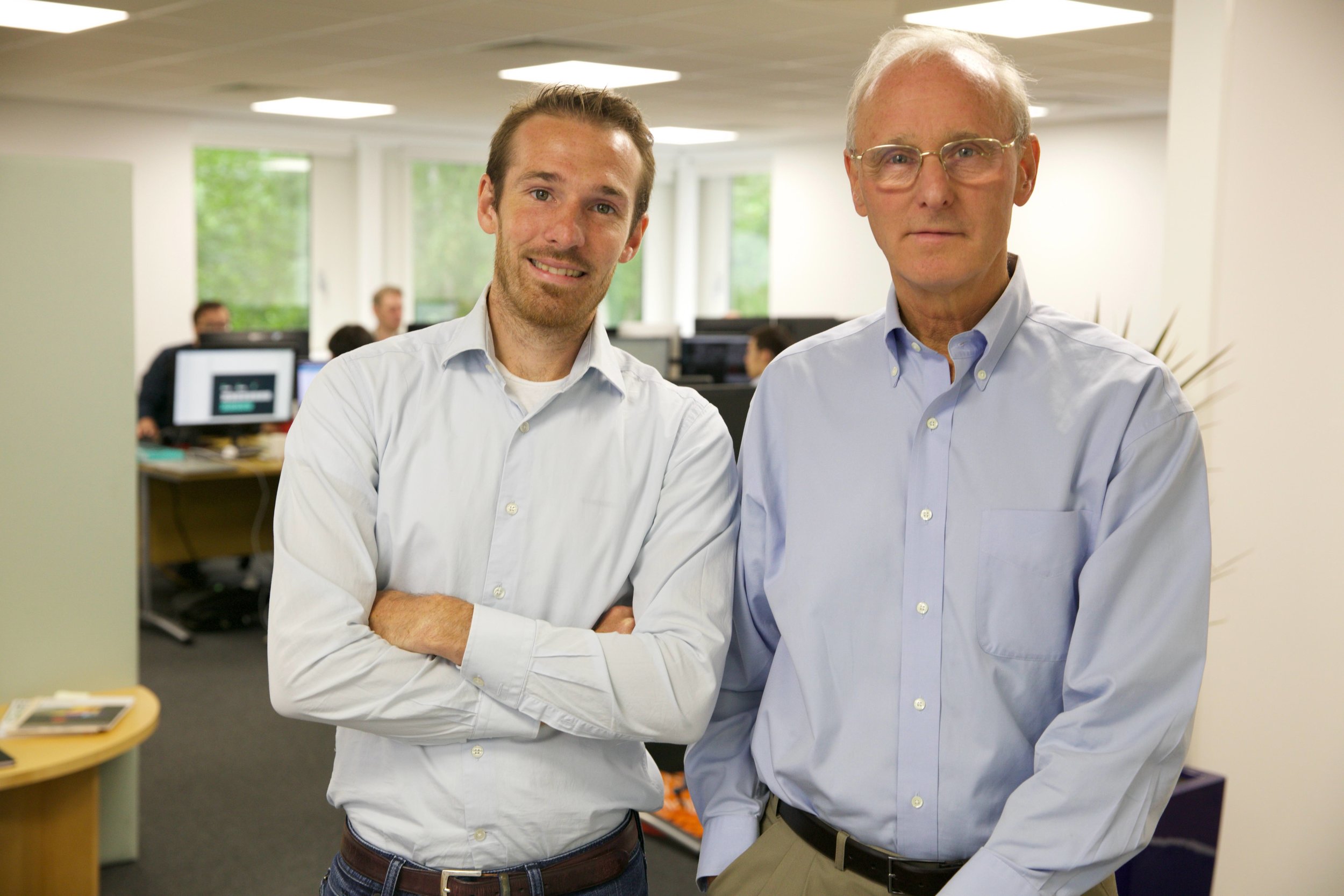
Healx raises $10m as investors back AI to find rare disease treatments faster
Cambridge, UK – 26th July, 2018 – Healx (https://healx.io), the Cambridge (UK) technology company developing breakthrough treatments for rare diseases, today announced a $10 million Series A funding round, led by Balderton Capital, Europe’s leading early-stage venture investor. Existing investors, Jonathan Milner and Amadeus Capital Partners also participated in the round.
Viagra inventor and Cambridge graduate use AI to cut medicine development time by 80%
Cambridge, UK – 26th July, 2018 – Healx (https://healx.io), the Cambridge (UK) technology company developing breakthrough treatments for rare diseases, today announced a $10 million Series A funding round, led by Balderton Capital, Europe’s leading early-stage venture investor. Existing investors, Jonathan Milner and Amadeus Capital Partners also participated in the round.
There are 7,000 known rare diseases that affect 350 million people worldwide. 1 in 20 people on the planet suffer from a rare disease – in aggregate, rare diseases are not rare. Yet 95% of rare diseases still do not have an approved treatment. Rare disease patients and families have been let down by a broken traditional pharma model that is dependent on and focuses on blockbuster drugs.
Healx’s mission is to reverse this by using Artificial Intelligence (AI), deep pharmacological expertise and extensive patient engagement to give sufferers of rare disease a better quality of life. Healx’s massively parallel approach combines cutting edge technology with one of the largest collections of insights from rare disease patient groups. The company was founded in 2014 by Dr Tim Guilliams, a Bio-Chemical Engineer and founder of the Cambridge Rare Disease Network, Dr David Brown, the inventor of Viagra and ex-Global Head of Drug Discovery at Roche and Dr Andreas Bender, a lecturer and researcher at Cambridge University’s Centre for Molecular Sciences Informatics.
“Healx has a simple but profound goal: To transform the lives of rare disease patients. Our technology helps us find treatments where none currently exist,” explained co-founder and CEO, Tim Guilliams.“Our proven approach is to start from existing drugs and apply artificial intelligence to niche disease populations, working with patient groups to accelerate treatment development. Our success comes from our world-class multi-disciplinary team of experts, leveraging cutting-edge artificial intelligence techniques to cut the discovery-to-treatment time from years to months.”
Healx’s technology has already been used successfully, including most recently in collaboration with FRAXA, the patient group for the Fragile-X Syndrome. A drug for Fragile-X that was discovered by Healx’s platform was ready for the clinic in less than 15 months, cutting typical drug development timelines by 80% and doing so at a substantially reduced cost.
At the heart of Healx, is HealNet, one of the world’s most comprehensive knowledgebases for rare disease, mapping over one billion unique disease, patient and drug interactions. HealNet was built and is maintained using a variety of machine learning methods applied to a wide range of data types from both publicly available and exclusive sources including scientific literature, patents, clinical trials, disease symptoms, drug targets, multi-omic data and underlying chemical structures. HealNet facilitates highly parallelized, automated, large scale drug discovery that drastically reduces time and cost to discovery compared to traditional processes.
Dr Matt Might, Rare Disease Parent, Professor of Internal Medicine, Professor of Computer Science, and Director of Hugh Kaul Precision Medicine Institute, University of Alabama, said: “What is exciting about Healx is the enormous potential of HealNet. While other companies have built one-off AI systems to analyse a smaller number of fixed datasets as part of a broader drug discovery process, Healx is building a long-term platform that is capable of incorporating data from every conceivable source and using that to build an overall understanding of patients, diseases and drugs. The company has already shown the fruits of this asset for a number of diseases and this next round of funding will allow them to apply it to a significantly larger number of diseases.”
Equally important to Healx’s success to date has been its treatment strategy. While the technology could be used for the development of new therapies, the company has so far focused on finding new uses for existing drugs and their application in potential combination therapies. Applying this strategy within the context of rare disease has allowed Healx to further improve speed to market – existing drugs require fewer and less complex trials and the Orphan Drug Act was designed to encourage research and development of therapies for rare disease.
The $10m investment will be used to more than double Healx’s diverse and multi-disciplinary team of software engineers, data scientists, pharmacologists and drug development experts from the rich cross-disciplinary Cambridge ecosystem and to expand its world class artificial intelligence and machine learning technologies. Balderton’s Suranga Chandratillake will be joining the Board alongside Shaun Grady (Global Vice-President Business Development Operations, AstraZeneca), Dr Hermann Hauser (Co-Founder of Amadeus Capital Partners), Dr Jonathan Milner (Founder and ex-CEO of Abcam, LON:ABC, and Founder of the Milner Institute for Therapeutics).
David Brown, PhD, Co-founder and Chief Scientific Officer, Ex-Global Head of Drug Discovery, Roche, and Co-Inventor of Viagra, added, “The traditional drug discovery process takes 10 to 15 years at a cost of $2 billion per new drug and with a failure rate of 95 per cent – it’s broken, it’s slow, it’s high failure, and it’s not economic for rare diseases. However, today’s technology can change that and help 350 million under-served rare disease patients. Healx is showing that we can massively transform the rate of discovery of new medicines, reducing timelines and costs.”
Suranga Chandratillake, Partner at Balderton Capital, explained: “Historically, the pharmaceutical industry has focused on what is the same about everyone, building blockbuster drugs that affect large groups of people. The future of medicine will focus on what is different about everyone, personalising treatment and taking the individual into context. The first frontier of this exciting new direction for medicine is rare disease and the only way it can be solved is by using automation to deliver a step-change in the volume of discovery that is possible. Healx’s HealNet platform, at the forefront of this shift, is already delivering value and Balderton is excited to have the opportunity to be part of the company’s journey.”
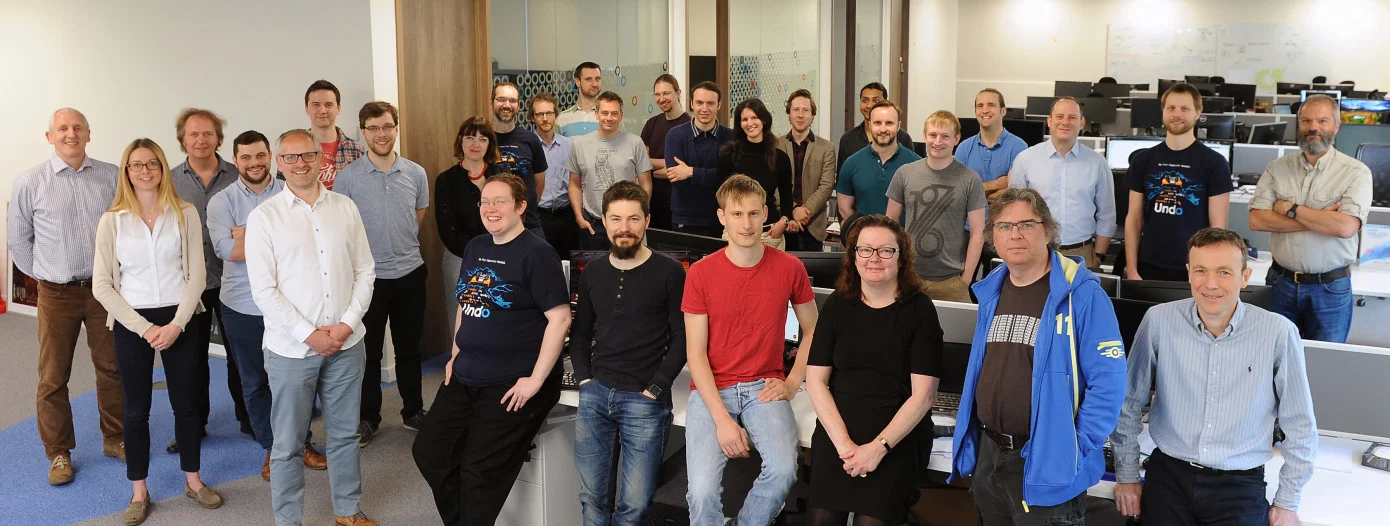
Undo gets $14M to scale to meet the software accountability challenge
Undo, a long time player in the debugging tools space, offering its program execution capture and replay technology to help others diagnose software failures, has closed a $14 million Series B round led by Cambridge Innovation Capital, the Cambridge, UK-based builder of tech and healthcare companies.
Undo, a long time player in the debugging tools space, offering its program execution capture and replay technology to help others diagnose software failures, has closed a $14 million Series B round led by Cambridge Innovation Capital, the Cambridge, UK-based builder of tech and healthcare companies.
The 2005 founded startup — initially bootstrapped (out of founder Greg Law’s garden shed) — has come a long way, and now has more than 30 paying customers for what it describes as its “record, rewind and replay” debugging technology, including the likes of SAP HANA, Mentor Graphics, Cadence and Micro Focus.
A quick potted history: In 2012, Law quit his job to go full time on Undo, raising a small amount of angel funding and then a $1.25M from seed investment in 2014, followed by $3.3M in a series A funding in 2016.
New investors in the Series B round include Global Brain Corporation, a Japanese venture capital fund; and UK-focused Parkwalk Advisors, while all Undo’s existing investor groups also participated — including Rockspring; Martlet; Sir Peter Michael (founder of Quantel, Classic FM and California’s Peter Michael Winery); the Cambridge Angels group and Jaan Tallinn (co-founder of Skype and Kazaa).
The Series B will be used to expand Undo’s software development team, accelerate product development and grow its US operations. Undo says its best markets so far are electronic design automation (EDA); database manufacturers/data management; and networking.
“This funding will be used to significantly improve performance as part of Undo’s always-on recording vision, and also to accelerate our product roadmap and broaden the technology beyond compiled code so that it can be used with Java and other VM-based languages,” it tells us.
“Our main competitor is the status quo — engineering organisations that do not evolve with the times. Old-school debugging techniques (e.g. printf, logging, core dump analysis) have been around for decades. 2000 was all about static analysis. 2010 was about dynamic analysis, 2020 will be about capturing software failures ‘in the act’ through capture & replay technology.”
Undo argues that its Live Recorder technology offers “a completely new way of diagnosing software failures during development and in production” — arguing that its approach is superior to traditional debugging techniques such as printf, logging, core dump analysis which are “general purpose and provide limited information”, while it says static and dynamic analysis “are deep but can only look at specific instances of bugs” — whereas it claims its tech “can capture failure instances across the whole spectrum and therefore plugs in the gaps which no-one else has filled yet”.
The UK company also sees a growing opportunity for its approach given increasingly complex and increasingly autonomous software risks becoming unaccountable, if it’s making decisions without people knowing how and why. So the wider vision for Undo is not just getting faster at fixing bugs but addressing the growing need for software makers to be able to articulate — and account for — what their programs are doing at any given moment.
“Longer term it’s about that journey towards software accountability,” says Law. “Software accountability is quite a broad thing — it really means the ability to be able to know for sure what some software did as it ran. And today that’s all about the programmer’s understanding of what their program has done. But actually it’s far more than just programmers that need to understand software — and particularly as we move into this second chapter of the information revolution where computers are beginning to make decisions that affect our lives and our livelihoods. I mean in the case of social media and Facebook and things, Western democracy! The ability to have that accountability behind software actions is going to become a really important thing. That’s a progressive journey that we’re on.
“So the question is what did the software actually do? And as we grow, and as time goes on, we’ll answer that question in progressively bigger and bigger contexts.”
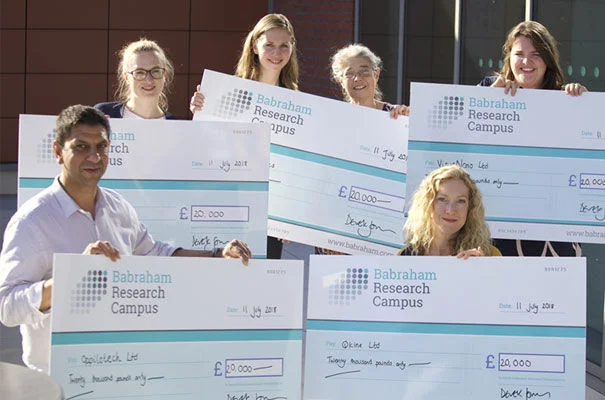
Cambridge duo share £100k haul to ‘Accelerate’ growth
Two companies each from Cambridge and London and one from Cardiff shared £100k and a raft of bolt-on benefits after winning the inaugural Accelerate@Babraham Startup Competition.
Two companies each from Cambridge and London and one from Cardiff shared £100k and a raft of bolt-on benefits after winning the inaugural Accelerate@Babraham Startup Competition.
Qkine Ltd and Kalium Diagnostics from Cambridge, London twosome VisusNano Ltd and Oppilotech Ltd and Antiverse Ltd from Wales each won £20k, mentorship benefits and access to the accelerators five-star facilities for disruptive biotechnology businesses.They went head to head with three other companies.
The competition attracted a rich variety of high calibre applications, all of which were reviewed by a panel of senior academics, investors, entrepreneurs and industry leaders.
After this challenging selection process, eight companies made it through to the second stage where they pitched to the competition panel and faced a quick-fire Q & A.
The panel consisted of John Trainer, VP and Head, Partnering and Strategy at MedImmune, Jo Parfrey, Non-exec Director of Babraham Bioscience Technologies Ltd, David Grainger, Partner at Medicxi, Tony Kouzarides, Professor of Cancer Biology at the University of Cambridge and Derek Jones, CEO, Babraham Bioscience Technologies Ltd.
Derek Jones said: “It is extremely challenging to communicate a business idea, cutting-edge science, and quantify the potential and convince a panel of judges that your proposition is better than the competition, whatever the situation.
“However, all eight finalists did incredibly well, and we were so impressed with all the pitches that we hope to be able to offer mentoring support and useful introductions to the runners up too.
“To those that made it through – we are delighted to welcome you to Accelerate@Babraham and look forward to working with you from September!”
John Trainer for MedImmune added: “It was a real pleasure to be part of this process. The eight finalists presented their ventures with professionalism, enthusiasm and a high level of competency, which was very impressive, but made our decision-making very challenging.
“Becoming part of the Babraham Research Campus community via the Accelerate@Babraham programme offers the chosen five ventures an exciting opportunity to join an environment that has an exceptional reputation for nurturing and supporting new life science concepts and companies. I wish them all well and look forward to seeing how they progress.”
RxCelerate is one of Accelerate@Babraham’s five strategic partners along with AstraZeneca, MedImmune, One Nucleus and Eli Lilly.
This inaugural competition supports the overall objectives of Accelerate@Babraham - to support the development of new science concepts and the creation of new companies.
It is also complementary of the Babraham Research Campus’ ongoing support of the Cambridge life science cluster, through the provision of access to the campus community and infrastructure without the need to be an established occupier on site.

doppel wins best Female-Led Investment at the UKBAA Angel Investment Awards
doppel wins best Female-Led Investment at the UKBAA Angel Investment Awards
We're honoured to announce that doppel has won Best Female-Led Angel Investment at this year’s UKBAA Angel Investment Awards. The company was recognised alongside Ros Singleton, doppel’s lead investor from the pro-women and award-winning angel network Angel Academe.
The award, which doppel was jointly awarded alongside World Wide Generation, represents a significant achievement as the company begins to scale.
Now in its 14th year, the annual UKBAA Angel Investment Awards celebrate high growth and success in the angel and early-stage investment market – recognising the fastest growing brands and acknowledging the founders, angels, crowd funders and early-stage venture capital investors behind them.
doppel received funding from two top angel groups Cambridge Angels and Angel Academe earlier this year.
doppel’s CEO Dr Fotini Markopoulou said:
“It’s fantastic to see the UK Business Angels Association dedicate an award to female-led investment. We are delighted to be recognised in such a prestigious category. We look forward to growing the business with support of both of our angel groups.”
Ros Singleton, lead investor from Angel Academe, added:
“I'm thrilled to be recognised for the Angel Academe investment in doppel. This is recognition for the whole team and collaborative approach we take to all our investments. Working closely with Cambridge Angels' lead, Paul Anson, I have learnt a lot and am confident the doppel team will go from strength to strength, thanks to their brilliant tech which helps people cope with life’s stresses naturally and within moments.”
Paul Anson, lead investor from Cambridge Angels, also added:
“We have great expectations for our investment in doppel. The drive and passion of the team and their ethical approach was key to creating an aligned and substantial syndicate and that same attitude will serve the founders well in scaling the business.”
About Angel Academe
Angel Academe is a pro-women and award-winning angel network.
We're helping more women enjoy the benefits of angel investing and, at the same time, helping the best UK tech startups access the capital and “smarts” women bring. We believe that diverse investor and startup teams make better decisions, are more capital efficient and give better return on investment.
About Cambridge Angels
Cambridge Angels is a group of more than 60 high-net worth investors who have proven experience as successful entrepreneurs in technology, internet, software, hardware, digital healthcare and life sciences. Members invest in and mentor high quality start-up and early-stage companies in these sectors in Cambridge, London, Oxford and throughout the UK.
Bango strengthens Amazon capability
Bango, the Cambridge-based mobile commerce company, has expanded the use of its billing integration technology, enabling customers to sign-up for Amazon Prime Video in the UK through a leading mobile operator.
Bango, the Cambridge-based mobile commerce company, has expanded the use of its billing integration technology, enabling customers to sign-up for Amazon Prime Video in the UK through a leading mobile operator.
Using Bango’s billing integration technology, qualifying customers have the opportunity to subscribe to Prime Video as part of the customer’s mobile plan.
This follows Bango’s initial launch with Amazon in India for Bharti Airtel, India’s largest mobile network operator.
Bango technology ensures that entitled mobile customers receive uninterrupted access to Amazon Prime Video from the moment they become active, for as long as they continue to subscribe and pay their mobile bills.
“Bango technology enables our customers to thrive by acquiring new users,” says CEO Ray Anderson. “Global merchants can offer their customers market leading products such as video and music services, home security, e-sports services and many more.”
Bango is the payment platform chosen by the world’s most influential companies to grow their sales faster in the new age of connected commerce.
Working with global stores including Amazon, Google and Microsoft Bango has become the industry standard, helping people make payments quickly and conveniently.
Peter Cowley appointed EBAN President
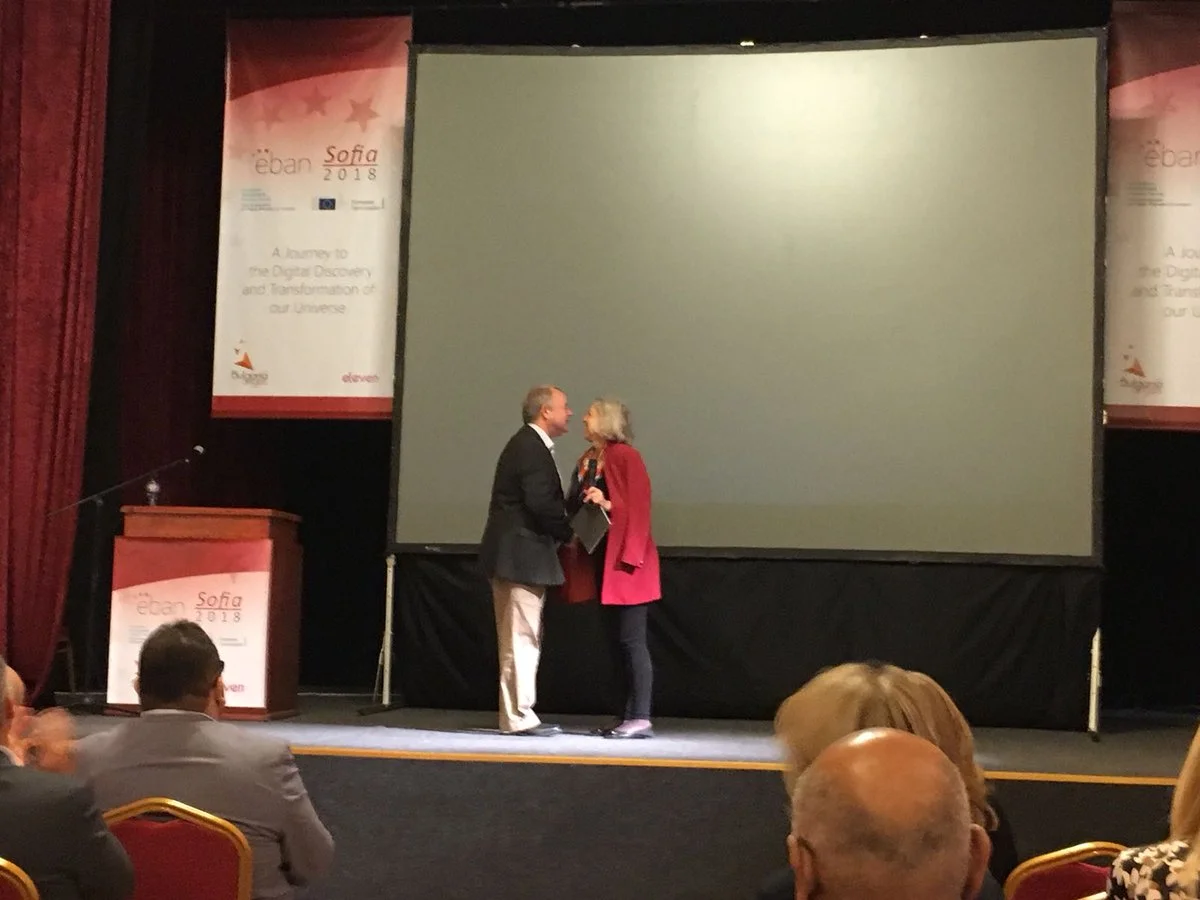
Huge congratulations to our #investedinvestor @plcowley for being appointed the new #EBAN #President! We are so proud of you! Thank you to the amazing #CandaceJohnson for her excellent contribution as President for the last four years! @EBAN_org @HaloIreland
Huge congratulations to our #investedinvestor @plcowley for being appointed the new #EBAN #President! We are so proud of you! Thank you to the amazing #CandaceJohnson for her excellent contribution as President for the last four years! @EBAN_org @HaloIreland

Oxford Space Systems raises £6.7m to make it quicker and cheaper to launch satellites
Oxford Space Systems has raised an additional £6.7m in funding, bringing the total amount raised since the company’s launch in 2013 to £10m.
Oxford Space Systems has raised an additional £6.7m in funding, bringing the total amount raised since the company’s launch in 2013 to £10m.
Oxford Space Systems (OSS) builds SpaceTech, including deployable antennas and panel systems, that are lighter, less complex and costly than those that are currently available – according to the firm.
This Series A funding, which was led by Longwall Ventures, makes OSS one of the most highly funded UK SpaceTech start-ups.
A syndicate of investors including IQ Capital, Foresight Williams, OTIF, Midven and Wren also contributed to the current round. The money will be used to open its new headquarters at the Harwell Space Cluster and to develop OSS’s technology, which uses light materials and origami engineering techniques to reduce storage volume.
OSS’ tech is important for a number of reasons. Satellites are expensive; it currently costs approximately £30,000 per kilo to launch into orbit (according to stats from OSS), so reducing the weight can save a lot of money.
Launching satellites is also a slow process. OSS claim to have reduced the time it takes to launch a satellite into space from 10 years (as estimated by NASA) to 30 months.
Mike Lawton, CEO and founder, said this is an exciting time for OSS: “Closing the latest round and moving to our own facility at the Harwell Space Cluster puts us in an excellent position to address the global opportunities we’re being approached with.
“I launched the company after realising that deployable antennas and structures are often a neglected area of a spacecraft – an area ripe for innovation. With OSS, we’re creating a step change by using innovative materials and a new approach to volume product build – and this investment is as much a recognition of our successes in delivering on this vision to date,” he continued.
He went on to say that commercial space is a large and rapidly growing market that will be worth trillions of dollars over the next decade. David Denny, partner at Longwall Ventures, added: “We are delighted to see what the OSS team have achieved since Longwall first invested in 2013. We have valued working with IQ Capital along with the other major investors in this and earlier funding rounds.”
Ed Stacey, partner at IQ Capital concluded: “It’s been a pleasure to work with OSS as the company has moved from strength to strength over the past few years. Having proven the value and reliability of its technology in space flight, and having made the transition from start-up to scale-up with this latest round of funding, OSS is now able to respond to the growing global demand for deployable space structures. ”
OSS’ current round is still open until September 2018, and the company hope to raise up to an additional £1.3m.
University of Cambridge sensors spin-out raises £1.2m
A sensors technology gamechanger spun out of Cambridge University’s engineering department has raised £1.2 million seed funding from Cambridge Enterprise, the Cambridge Angels and Cambridge Capital Group.
A sensors technology gamechanger spun out of Cambridge University’s engineering department has raised £1.2 million seed funding from Cambridge Enterprise, the Cambridge Angels and Cambridge Capital Group.
Sorex Sensors Limited has developed a novel mass sensor which is based on Film Bulk Acoustic Resonator (FBAR) technology. It is said to have immense potential in areas such as the Internet of Things.
It is said to have several advantages over existing sensors: (1) it has high mass sensitivity, down to 1 femtogram (the weight of the average virus particle); (2) it is extremely small, being about the same as a human hair in diameter, and can be arranged into arrays on the same chip to measure different targets simultaneously; and (3) the sensors have an incredibly low power requirement, allowing them to be operated from a coin cell, battery, mobile phone or even by energy harvesting from an RFID device.
FBARs are manufactured using standard CMOS processes and are currently produced in their billions for the telecoms industry each year as filters and multiplexers, rather than sensors.
Sorex Sensors is initially focusing on film thickness measurement in deposition systems, particle monitoring and specific gas molecule sensing in consumer goods.
However, the numerous advantages and versatility of this technology open up a wide range of opportunities in a variety of fields, from explosive detection to biological sensing research equipment.
With the low power requirements and the possibility of combining different sensor targets on a single chip, such as particulates and gases, Sorex Sensors have the potential to deliver unique advantages in emerging markets around the Internet of Things.
The company has licensed patents from Cambridge Enterprise and the University of Warwick and will have ongoing collaborations with the University of Cambridge, the University of Warwick and the Universidad Politécnica de Madrid. Its core IP has been granted in the US and EU.
Sorex Sensors’ CEO Dr John Pritchard said: “The Sorex Sensors technology is uniquely well-suited to address pressing problems, such as the need for widespread, accurate and inexpensive monitoring for particulate air pollution, and the need for precise measurement of material thickness in the electronics industry to reduce cost and increase throughput.”
Elaine Loukes, investment director at Cambridge Enterprise and Richard Parmee of the Cambridge Angels will be joining the board.
Sorex Sensors was founded by Professor Andrew Flewitt, Dr Mario de Miguel-Ramos and Professor Bill Milne from Cambridge with co-founders Dr Marina Cole and Professor Julian Gardner from the University of Warwick and Professor Enrique Iborra from the Universidad Politécnica de Madrid.
Professor Flewitt said: “The really exciting aspect of the Sorex Sensors’ technology is that the same device can be tailored to specifically detect a wide range of targets.
“This allows detection of combinations of targets to be simply realised on a single chip at low cost, such airborne particulates and pollutant gases. Coupling this with a mobile phone could allow a personal air quality monitoring device.”

The strawberry-picking robots doing a job humans won't
With strawberry picking season well under way - but migrant labour in short supply in several countries - we look at the various robots being developed around the world to help producers harvest this most popular fruit.
With strawberry picking season well under way - but migrant labour in short supply in several countries - we look at the various robots being developed around the world to help producers harvest this most popular fruit.
Next time you buy strawberries take a look a good look in the punnet. Do the berries still have the stem attached or has it been plucked off leaving only the green hat of leaves called the calyx?
You may not think that matters, but it's a key consideration for growers as they contemplate the merits of a range of robotic prototypes that promise to pick strawberries as fast and as carefully as humans.
Whether the berry is plucked or whether the stalk is snipped through and kept attached is one critical difference between the concepts that Spanish, Belgian, British and US engineers are testing, ready to roll out in fields as soon as next year.
Fragile fruits
Harvesting soft fruit mechanically represents a huge challenge - each berry needs to be located, even if it's behind a leaf, assessed for ripeness and then harvested and boxed with enormous care to avoid bruising.
But recent developments in visual sensor technology, machine learning and autonomous propulsion have brought the goal within reach.
"If you can put a man on the moon you can get a machine to pick a strawberry," says Tom Coen, founder of Octinion, a Belgium-based start-up conducting a final phase of field trials this summer in partnership with growers in the UK and continental Europe.
"Today we can say we have a [robotic] arm that is competitive with a human in terms of price and speed," he says.
Octinion's arm is mounted on a self-driving trolley. It reaches up from below and, using 3D vision, grips a ripe berry between two cushioned plastic paws. The gripper then turns the fruit by 90 degrees to snap it off its stalk, mimicking the technique a human picker would use.
The prototype is picking one strawberry every four seconds, says Mr Coen, and depending on the cultivar, will collect between 70% and 100% of the ripe fruit - results that he says make it competitive with human pickers.
The berry is left with only the calyx, which is the way European consumers are accustomed to buying their berries.
"We don't believe in cutting," he says. Stalks risk bruising other berries in the punnet, he argues.
Stem subject
But Cambridge-based start-up Dogtooth is taking a different approach.
Founders Duncan Robertson and Ed Herbert have just returned from Australia where they've been testing a picker that delivers berries with a centimetre or so of stem still attached, the way UK retailers prefer, because it extends shelf life.
Dogtooth is cautious about giving away too much about how its robot works, but like Octinion it is based around robotic arms mounted on a mobile platform.
It uses computer vision to identify ripe fruit and machine learning to evolve efficient picking strategies. After picking, the robot grades berries to determine their size and quality, and places them directly into punnets.
Dogtooth also prides itself in working around the needs and current practices of UK growers.
So while Octinion's machine will only work on fruit grown on raised platforms, usually in polytunnels, Dogtooth's will pick traditional British varieties in the field.
"Adopting robotic practice will be a big ask, so I don't want to ask growers to pull out existing infrastructure to support our robot," says Mr Robertson.
"We're trying to reinvent an important part of how soft fruit is grown, not reinvent the whole thing."
Rotting fruit
Robots can operate at all times of the day or night - harvesting during the chillier night hours can dramatically lengthen shelf life and avoid bruising.
But developers emphasise the motivation is not to replace migrant labour with cheaper, more efficient robots. In fact, it's not proving easy to replicate the standards that human pickers deliver.
Strawberry farmers say they are increasingly struggling to find people to do the work. They need the robots.
In the UK, the fall in the value of sterling following the EU referendum vote has made it increasingly difficult to recruit overseas workers. UK citizens seem reluctant to do such seasonal, physically laborious work.
In the US, growers say they have had to let fruit rot in the fields. Tighter immigration rules, a rise in the minimum wage, and a dwindling birth rate in Mexico, have all meant there just aren't the workers available to harvest them.
Necessity
So producers will have to scale up robotic picking if they're to survive, many argue.
Agrobot, built by Spanish entrepreneur Juan Bravo, should be commercially available in California next year. And in Florida, the Harvest Croo team, led by former Intel engineer Bob Pitzer, is also close to launch.
Both of these are much bigger than the robotic arms being developed by Dogtooth and Octinion.
Both boast tractor-like vehicles spanning several rows of plants with arms that reach down to locate and pick fruit.
Each Agrobot arm grabs a stalk and snips, carrying the fruit off by its stem to minimise damage.
The Harvest Croo (Computerized Robotic Optimized Obtainer) uses paddles to gather up the plant's leaves to expose the fruit. Rotating grippers then grasp and snap the berries off the stalk. Americans, like most Europeans, are accustomed to stemless fruit.
Mr Pitzer says two thirds of the country's strawberry production is backing the move to mechanisation.
"Growers advertise and pay a lot of money - a good picker can make $30 (£22) an hour [in Florida]; in California it's $50 an hour," he says.
But they still can't recruit enough workers.
"People like to say if you paid them more they'd do the job, but it's just not true. We know in future that labour won't be available."
Undersea tech company backed with £1.2m investment
A Bristol-based undersea technology company is to triple its workforce after receiving a £1.2m investment, enabling it to launch a new live 3D subsea survey system.
The investment in Rovco comes from Green Angel Syndicate, Cambridge Angels and Bristol Private Equity Club.
A Bristol-based undersea technology company is to triple its workforce after receiving a £1.2m investment, enabling it to launch a new live 3D subsea survey system.
The investment in Rovco comes from Green Angel Syndicate, Cambridge Angels and Bristol Private Equity Club.
Following two years of extensive research and development, Rovco's new technology will begin field trials this month.
The system has been developed to manage the increasing complexity of subsea operations, using real-time 3D vision and AI data analysis to cut the cost of underwater inspections and maintenance.
To meet an increased market demand for subsea inspection around offshore windfarms, pipelines and cables, Rovco also plans to add three new remotely-operated vehicles to its fleet within the next six months.
Brian Allen, founder and chief executive at Rovco, said: "We have entered the second quarter of 2018 with a strong pipeline of sales and we are extremely confident in our ability to grow our client base both in the UK and overseas.
"Despite the ongoing market challenges, we have continued to invest in R&D to ensure we deliver high quality and efficient services in several key and growing international markets.
"This latest financial backing will not only allow us to accelerate our growth plans, but it will see us work alongside some of the UK’s most well-established and knowledgeable business leaders whose industry experience will be extremely valuable in the next stage of our development."

Eagle Genomics Announces Senior Leadership Changes
Eagle Genomics has appointed Executive Chairman Anthony Finbow to the post of Chief Executive, with founder Abel Ureta-Vidal moving to become Chief Product Officer.
CAMBRIDGE, England--(BUSINESS WIRE)--Eagle Genomics has appointed Executive Chairman Anthony Finbow to the post of Chief Executive, with founder Abel Ureta-Vidal moving to become Chief Product Officer.
The change in management structure marks a new phase for Eagle Genomics as the organisation rapidly shapes for scale to meet customer demand. The company has won 11 enterprise customers since its last funding round and has most recently been selected as one of just 12 companies in the latest cohort of the Microsoft Scale-Up program, opening it up to the global Microsoft customer network.
Eagle’s knowledge discovery platform, the e[automateddatascientist], transforms scientific data into actionable insights that drive product decision making. The knowledge gained from the platform enables companies to quickly assess product potential, accelerate market entry and mitigate risk.
CEO of Eagle Genomics Anthony Finbow commented:
“I am delighted to become CEO at Eagle Genomics at this formative stage as we shape the organisation for scale and execute on our growth strategy. Over the last two years we have made significant strides in building our software platform and have a clear product market fit in some compelling growth markets. When applied to microbiome research, the platform is enabling new insight that will shape the consumer and healthcare products of tomorrow; this is something we are particularly excited about.”
CPO and Founder Abel Ureta-Vidal commented:
“I've worked very closely with Anthony over nearly 3 years. Working together with our complementary skills and vision, we have transformed the company and brought it to where it is today. I'm delighted to move into the role of Chief Product Officer; closer to customers, the market and product management where I can add the most value and make a difference.”
There have also been non-executive board appointments, Cliff Meltzer has become Non-Executive Chairman, while Simon Thorpe becomes Non-Executive Director.
Cliff Meltzer is the CEO at Excelicare and brings a wealth of experience from previous senior roles at some of the world’s leading tech companies. Cliff spent 11 years at Cisco Systems holding numerous executive level positions, as well as 2 years at Apple where he was responsible for the platform dependent software for Macintosh products.
Cliff commented: “I am delighted to be taking on the role of Non-Executive Chairman to help the company grow operationally and strategically. Eagle Genomics is at the leading edge of this crucial technological domain.”
Simon Thorpe is an investor in UK companies with a focus on the technology sector. He was voted UKBAA’s Angel Investor of the year 2016/17.
To further support company growth, Eagle Genomics raised $1m within 3 weeks of the launch of its latest investment round. Made up of a diverse range of investors, the round remains open until the end of June.

Oracle acquired Grapeshot, a ‘brand safety’ marketing provider, sources say for up to $400M
Oracle has announced that it will acquire Grapeshot, a startup out of Cambridge, England, that has developed a platform to help ensure “brand safety”, along with solutions to help brands, agencies, publishers and ad platforms to match ads to more specific placements overall.
CIn the era of fake news and controversies over how brands’ advertising — via programmatic platforms — unwittingly ends up alongside content with which they’d rather not be associated, Oracle has made an acquisition to beef up its ability to help customers with these marketing challenges.
The company has announced that it will acquire Grapeshot, a startup out of Cambridge, England, that has developed a platform to help ensure “brand safety”, along with solutions to help brands, agencies, publishers and ad platforms to match ads to more specific placements overall.
The startup will become a part of the Oracle Data Cloud, Oracle said, working specifically in the area of Audiences and Measurement, which already provides a number of other tools to marketers, such as data for custom segmented audiences.
The terms of the deal have not been disclosed but one of the investors tells us it was in the multiple hundreds of millions of pounds. Conservatively assuming at least £200 million, this means Grapeshot has sold for at least $280 million; but the source said it would be safe to assume a higher multiple, so I’m now thinking it was for between $300 million and $400 million. However, another source said it was for around $150 million. Assuming both are “right” the higher number might be including an earn-out. Still trying to find out more.
In either case, it is a strong exit for the company that speaks both to how timely this issue is right now, and also the strength of Grapeshot’s technology and existing business. For some context, Pitchbook notes that Grapeshot’s last pre-money valuation was around $56 million (£40.2 million) in May of 2017, while Crunchbase notes that the company has raised only $22.4 million from investors that include IQ Capital Partners, Draper Esprit and Albion. It’s “an outstanding return”, said the investor.
Grapeshot, via its Contextual Intelligence Platform, says it works with some 5,000 marketers globally, covering some 38 billion programmatic ad impressions. It’s been growing at a rate of over 100 percent year-over-year, it says. It looks like it will continue to work with existing customers, who will in turn become potential targets for the cross-selling of other Oracle services.
The rise of Grapeshot and its acquisition by Oracle speaks to a growing challenge in the area of adtech and corresponding marketing technology: while programmatic advertising has largely become the norm across the web, there are some unintended consequences from all that automation.
For one, it’s harder to specifically match ads to content in every case — and this might potentially become even more difficult with the rise of stronger data protection and increased scrutiny on how are data is used for ad targeting. One of Grapeshot’s services helps marketers solve this with technology that helps match ads not just to basic sites, but to keywords on pages.
But in the worst-case scenarios, brands are finding their ads running alongside content that is outright damaging to their images. In a recent scandal, advertisers were forced to freeze some ads on YouTube when they were found to be running alongside videos of kids with obscene comments from viewers.
Ideally both for the brands and YouTube, the ads would have never been there to begin with — and that is the kind of outcome that Grapeshot (and now Oracle) is going to be helping achieve.
There are, of course, a lot more controls in place now to try to prevent situations like this, and products aimed at generally making it easier to match ads to content. Search giant (and YouTube owner) Google, the world’s biggest online advertising company, earlier this year launched a new AdSense product that uses machine learning to “read” content on specific pages to understand the context before it serves an ad to it.
The interesting thing about Grapeshot is that it’s working a layer back before this. By not being tied to any specific ad platform, Oracle has the potential to play a strong hand as an unbiased helper to customers to achieve the best results.
Oracle has made a number of acquisitions to expand its digital marketing and advertising solutions business, to tap into the rise of social media and also to compete better against Salesforce. They have included Compendium, Moat, Involver, Vitrue, Netsuite, Market2Lead and many more.
Additional reporting Josh Constine