

Nepal joins clamour for anti-pollution masks
Responding to the global air quality crisis, a Cambridge-based business has won £5.5 million in overseas business to countries like Nepal.

Paragraf and Queen Mary University awarded £500,000 to explore the use of graphene to replace rare metal Indium
Paragraf, which recently raised $16 million USD to push forward graphene-based electronics technologies, and Queen Mary University of London have been awarded £500,000 (around $623,000 USD) by Innovate UK to explore using graphene to replace the rare metal Indium.
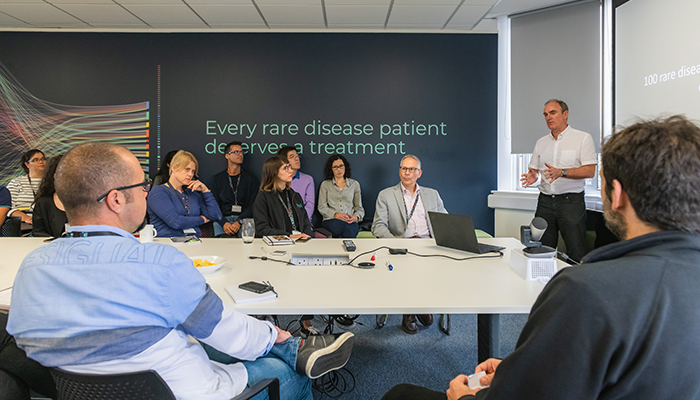
Dr Neil Thompson Appointed CSO of Healx to Spearhead Drug Discovery Expansion
We are pleased to announce the appointment of Neil Thompson, PhD, as Chief Scientific Officer (CSO)

All the winners and the pictures from the SME Cambridgeshire Business Awards 2019
The finest small and medium-sized enterprises in the county were recognised at the annual SME Cambridgeshire Business Awards, where it was revealed that the Cambridge Independent will be taking over the event next year.

Paragraf raises £12.8m to deliver its first graphene-based electronics technologies
UK-founded graphene-based electronics technology company Paragraf announces today the close of its £12.8m Series A round. The funding, led by Parkwalk, will fuel product development as the company commercialises.

Ion mighty: Controllis launches powerful new comms technology
Critical telecoms and off-grid sites can now gain significant performance and cost improvements by switching to state-of-the-art lithium-ion batteries through new technology launched by expanding Cambridge and Thetford hybrid power systems specialist Controllis.

CCS welcomes opening up of 60GHz mmWave unlicensed band for gigabit fixed wireless access (FWA) in Europe
New CEPT ECC recommendations pave the way for ubiquitous deployment of unlicensed 60GHz technology – including EU Type Approved CCS Metnet 60G mmWave Solution.

Repositive makes world-leading directory of 5,300 preclinical cancer models publicly browsable as first stage of platform relaunch
Repositive, the Cambridge-based startup that connects researchers with the right preclinical cancer models to enhance their drug development programmes, has made its world-leading directory of preclinical cancer models publicly browsable as the first stage of relaunching its Cancer Models Platform.
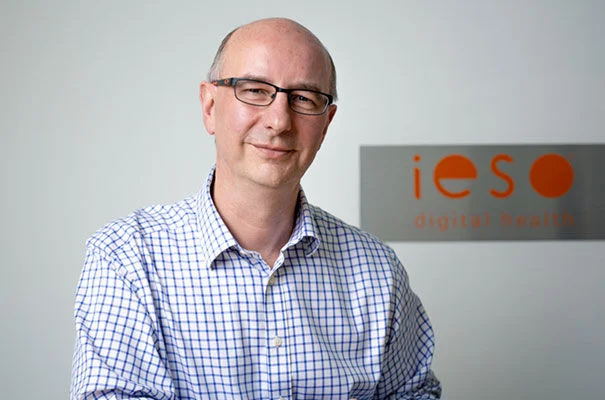
Mental Health under the microscope in Cambridge
Cambridge’s global pre-eminence in creating digital techniques to combat mental illness will be showcased at the next Business Weekly-Mills & Reeve Life Science Forum on July 24.

How social media predicts publisher Unbound's next bestseller
London-based tech start-up founded by author of 'Crap Towns' recently secured £840,000 in crowdfunding

£8m drug-resistance grant for Oxford Drug Design
Oxford Drug Design has received over £8 million in grant and equity investment from CARB-X, the UK Department of Health and Social Care (DHSC) and o2h Ventures.

Deliveroo partners with Cambridge Mask Company to tackle UK pollution
Deliveroo marked Clean Air Day by teaming up with Cambridge Mask Company in an initiative that saw free anti-pollution masks handed out to thousands of cyclists at pollution hot spots in four of the UK’s worst affected cities – London, Manchester, Birmingham and Glasgow.
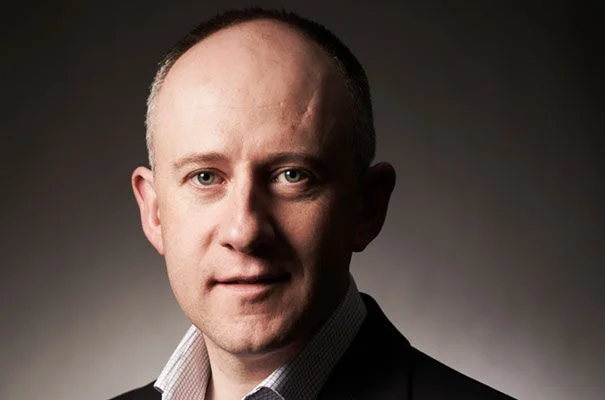
Asia major as data doyen GeoSpock opens Tokyo and Singapore offices
Cambridge extreme data technology business GeoSpock is leveraging growing demand in Asia by opening operations in Tokyo and Singapore. It plans to hire 30 staff in Asia in the next 24 months.
Cambridge extreme data technology business GeoSpock is leveraging growing demand in Asia by opening operations in Tokyo and Singapore. It plans to hire 30 staff in Asia in the next 24 months.
The move hands GeoSpock a springboard to broaden services to new and existing clients in both regions. These include the Singapore Land Authority and X-locations, a Japanese-based artificial intelligence platform.
The UK specialist is mining fresh opportunities for growth within vertical markets such as smart cities, IoT, enterprise, asset and logistics.
Singapore will operate as the company’s Asian headquarters and enable GeoSpock to respond to the rapid growth in demand for robust data infrastructures that can support innovation.
Richard Baker, CEO of GeoSpock, said: “The world’s population is set to grow by 2.2 billion between now and 2050 with 60 per cent of the global population living in Asia. As a result, we anticipate this is where we will see the largest growth in the Internet of Things and its associated sensors.
“However, to prepare for an increasingly connected world, organisations need a platform that can uncover insights within data to inform business decisions. As part of our expansion into Asia we will use our expertise to support geospatial initiatives and the advancement of IoT technologies.”
To drive the initiative, Sean Kim has been appointed as vice-president of Asia and will be responsible for growing brand advocacy and revenues. Sean Kim is an experienced industry sales leader with nearly 30 years’ experience in launching and expanding technology businesses in the Asia-Pacific including companies such as AirTies, Technicolor, ANT and Nagravision.
Sean Kim will be supported by the appointment of John Yam who will lead the Singapore office and Motohiro Watanbe who will manage the office in Japan. To help drive its ambition to become the leader in spatial big data management and analytics in the region, GeoSpock plans to add up to 30 people in commercial, technical and data science roles in Asia over the next two years.
“Across Asia, developments in infrastructure and smart cities are driving the need for access to dynamic contextual data. GeoSpock’s technology is at the cutting edge of spatial big data and meets this demand,” said Sean Kim, VP of Asia. “I expect GeoSpock to contribute hugely to the geospatial market both in Asia and around the world.”
GeoSpock brings sensor data to life – translating complex connections into meaningful visualisations that reveal the bigger picture.
Its platform has the power to transform lives and businesses – whether it's cutting harmful emissions by reducing traffic congestion or maximising profitability by optimising commercial operations.
In seconds, GeoSpock harnesses trillions of data points to discover hidden patterns and create a valuable new perspective in markets ranging from maritime and logistics to smart cities and data technology.

£550,000 funding will help Qkine to establish Cambridge Science Park base
Qkine has secured £550,000 in funding to establish a UK manufacturing base on Cambridge Science Park and expand its research and development activities.
The company, which has moved from Merlin Place in Milton Road, Cambridge, into Building 152 beside the Bradfield Centre, is a specialist manufacturer of proteins for stem cell, organoid and regenerative medicine applications.
The funding round was led by Cambridge Enterprise and five angel investors, all of whom were following up initial seed investments made in April 2018.
Dr Andy Richards, the biotech entrepreneur and founder member of the Cambridge Angels, has joined them in backing the company, which was spun out of the University of Cambridge in 2010 and is led by Catherine Elton.
Its proprietary technologies and protein engineering techniques help it to produce exceptionally high purity growth factors and cytokines.
Its products can be used by stem cell researchers, who can use them for modelling of diseases, to aid the drive towards precision medicine and develop new therapeutics.
And they can be used by scientists working with organoids to help us understand human biology better and test drug candidates.
Dr Richards said: "Catherine and team have done a great job at Qkine. I am excited to join their investors in this round as they move to their new facility, scale up their team, extend their R&D pipeline and expand their commercial ambitions.
“The need for quality and reproducibility in stem cell biology and exciting new areas such as organoids is driving a growing market that Qkine is uniquely positioned to satisfy."
Qkine will expand its research team and develop its R&D pipeline with the money, while accelerating the commercialisation of its products with a new manufacturing base.
Jim Warwick, angel investor and chairman of Qkine said: “Following my initial investment in Qkine was a no-brainer - its growth factors are developed from a genuinely differentiating technology.
“The market for these reagents is growing rapidly and the company’s founders have great, complementary skill sets.”
The company helps solve scientific challenges for researchers such as structural heterogeneity, poor stability and solubility and spurious interactions with other biomolecules, meaning it can provide more reliable tools for research and bio-manufacturing.
Dr Christine Martin, investment manager (life sciences) at Cambridge Enterprise, who joins the board, said: “Cambridge Enterprise is pleased to support Qkine as it takes its next steps. The need for high quality cytokines and growth factors continues to expand, and Qkine is poised to meet the demand with a catalogue of products to support research into stem cell, organoid and regenerative medicine applications.”

Cambridge University spin-out aiming to improve patient outcomes in mental health arena
Cambridge’s credentials as a nervecentre for mental health research have taken a fresh uptick as university spin-out Psyomics closes in on a major seed funding round and starts to scale.
Cambridge’s credentials as a nervecentre for mental health research have taken a fresh uptick as university spin-out Psyomics closes in on a major seed funding round and starts to scale.
Psyomics has impressive co-founders in Professor Sabine Bahn and former Horizon Discovery ace Dan Cowell, who is CEO. Barnaby Perks, founding CEO of Ieso, is a non-executive director; Anne Dobree of Cambridge Enterprise is current chair and Martin Glenn of Parkwalk Advisors is a non-executive director.
Professor Bahn previously founded Psynova Neureotech, along with Cambridge University dontrepreneur Professor Chris Lowe, which was a subsidiary of Rules-Based Medicine – acquired for $80 million by Nasdaq-quoted Myriad Genetics Inc in 2011.
With companies such as Ieso Digital and Congenica already powering the UK’s bid for world leadership in mental health digital technologies, the emergence of Psyomics could hardly be better timed.
Approximately one in four people in the UK experience mental health concerns each year. While advances in mental health research are being made, there remain significant barriers to effective detection, treatment and prevention.
Psyomics is looking to overcome these barriers by combining digital approaches with developments in biomarker technology to benefit those facing mental health challenges. The tools currently in development are targeted for both clinical and workplace settings, specifically designed to combat the respective mental health-related challenges faced within these environments.
In the future, the business plans to expand its reach to provide personalised solutions for the wider community, building on what Cowell calls a granular approach to the many and varied problems of mental health.
The company’s work is funded and supported by Cambridge Enterprise, the commercial arm of the university, and a Horizon 2020 grant from the European Commission.
Psyomics also won an innovation contest with IC Tomorrow and AXA PPP to look at mental health awareness and prevention in the workplace, and won the Problem Solution category of the AXA PPP Health Tech & You Awards. It was also awarded a grant from the Technology Strategy Board to further develop its technology for differentiating bipolar disorder from depression.
The new seed round – not quite a Series A, according to Cowell, will give Psyomics ample runway to build on its current 10 headcount and scale engagement with clinicians, including GPs.
Mental Health is the single largest cause of disability in the UK and the wider economic costs in England alone have been estimated at £105.2 billion a year. This includes direct costs of services, lost productivity at work and reduced quality of life.
Working closely with the Cambridge Centre for Neuropsychiatric Research, led by Professor Bahn, the mission is to develop digital tools and, for some challenges, biological tests, that can be used to develop a comprehensive understanding of an individual in complete confidence and then combined with an up-to-date record of scientific research, point the user towards sources of help and support as well as treatment options available.
The team is working on a range of tools for prevention and early detection in the workplace, diagnosis of depression and bipolar in a clinical setting and triage tools to be used in primary care.
Professor Bahn is a practising psychiatrist working with the cash-strapped NHS so can witness and appreciate all sides of the mental health debate. Psyomics is based at the Innovation Centre at Cambridge Science Park, soon to be replaced by a new state-of-the-art hub, and Cowell says the cluster provides the perfect springboard for growth of the business.
“We are still at a relatively early stage – almost in stealth – but have already built an impressive technology suite to ensure earlier and rapid diagnosis of mental health problems and optimum ways of treating them.
“There remains a stigma attached to mental health issues but the fact it is on the public agenda is a major advancement. One of the key challenges is to differentiate between people who are simply feeling low on occasions and those who may have more serious mental health issues but either don’t recognise them as such or feel restrained from seeking treatment.
“Our focus is on working with GPs and other clinicians on earlier diagnosis and to get product to market much more quickly; to more accurately identify problems much earlier so clinicians can deliver timely solutions.
“Dealing with mental health issues is not as clear cut as identifying and dealing with, say, a tumour or a broken leg – conditions that are more visible.
“Our model allows us to differentiate between people who occasionally feel down from those with deep-seated mental health problems; to identify those conditions earlier and to therefore ensure swift diagnosis and treatment. GPs and psychiatrists with whom we are engaged see the benefits of what out technology can bring.”
Cowell says that despite increasing awareness of the problems mental health issues cause to sufferers, their families, businesses and society, this area is still chronically underfunded.
Accuracy and speed of diagnosis of mental health problems is absolutely crucial for clinicians and patients: Psyomics has all the tools end expertise to improve patient outcomes and that, says Cowell, has to be the overarching mission.

Unbound launches crowdfunder to expand US operation
Crowdfunding publisher Unbound is launching a new funding campaign to continue its US expansion and support its UK operations.
Crowdfunding publisher Unbound is launching a new funding campaign to continue its US expansion and support its UK operations.
The publisher, which says it already receives 20% of its crowdfunding pledges from the US, is joining forces with equity crowdfunding platform Crowdcube to raise £1million.
The money raised from the Crowdcube campaign will allow Unbound to fund its first US hires and build a dedicated commissioning team in the region. The publisher is considering where to base the team and has not ruled out the West Coast of the US.
From September, Unbound will also start to sell 22 select titles from both front and backlist into US bookstores through a new distribution agreement with Consortium.
Unbound, which has published The Good Immigrant by Nikesh Shula and Man Booker longlisted The Wake by Paul Kingsnorth, added the funding will also expand the capability of its predictive machine learning app to enable authors to have more insight into how well their Unbound crowdfunding campaign is likely to perform before it launches. Dr Noelia Jiménez Martínez, head of data science and astrophysics at Unbound, has been developing the app for 12 months, and it is now routinely being used by the commissioning team in-house. The algorithm tested to 80% accuracy.
C.e.o. and co-founder Dan Kieran (pictured) said: “As the world’s first crowdfunding publisher, Unbound has always been at the forefront of democratising publishing, so it makes perfect sense for us to be more democratically owned ourselves. We wanted to offer our authors, creators and backers the chance to share in the company’s future success. Launching a fundraise with Crowdcube feels like the perfect fit for us.”
Unbound’s Crowdcube campaign will launch privately on Thursday 2nd May, giving authors and backers first chance to support. It will be open to the public on Tuesday 7th May. Potential investors can register their interest here.

myrtle.ai
myrtle.ai has assembled a globally renowned team of experts with expertise in producing low power inference circuits and works with quoted businesses on both sides of the Atlantic.
myrtle.ai has assembled a globally renowned team of experts with expertise in producing low power inference circuits and works with quoted businesses on both sides of the Atlantic.
It has been chosen to develop a Speech Recognition benchmark for MLPerf – a new Machine Learning (ML) benchmarking competition backed by Google, Baidu, Intel and AMD.
MLPerf, a collaboration of tech giants and researchers from numerous universities including Harvard, Stanford and the University of California Berkeley, is aspiring to drive progress in ML by developing a suite of fair and reliable benchmarks for emerging artificial intelligence hardware and software platforms.
myrtle.ai has been selected to provide the computer code that will be the benchmark standard for the Speech Recognition division. The code is a new implementation of two AI models known as DeepSpeech 1 and DeepSpeech 2, building on models originally developed by Baidu.
it has been chosen to develop a Speech Recognition benchmark for MLPerf – a new Machine Learning (ML) benchmarking competition backed by Google, Baidu, Intel and AMD.
Myrtle was founded to develop software and services for public and private data centres. Originally specialising in image processing and large scale simulation Myrtle helped produce computer generated content for over 20 major Hollywood blockbusters.
Clients have included NYSE and NASDAQ listed companies in LA, Vancouver and London as well as a major automotive OEM and a government department.
Cambridge Angels founder, Robert Sansom, is a director while another angel and entrepreneur Robert Swann, who was a first mover in the enterprise, is also on the board.
MoD backs satellite ‘origami radar antennas‘
The UK‘s Ministry of Defence (MoD) has approached start-up Oxford Space Systems (OSS) to design antennas for a sovereign satellite radar system.
The UK‘s Ministry of Defence (MoD) has approached start-up Oxford Space Systems (OSS) to design antennas for a sovereign satellite radar system.
Ministers envisage a constellation of British spacecraft gathering intelligence for operational and tactical applications in the 2020s.
OSS has novel technology that fits the satellites‘ requirement to be low-cost.
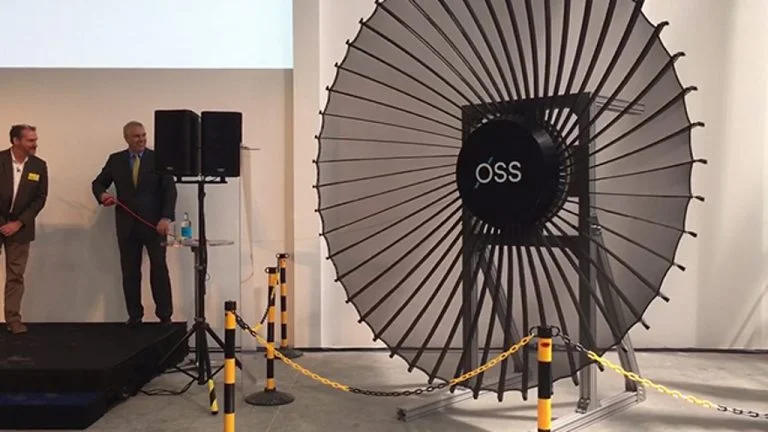
Oxford‘s carbon-fibre antennas stow away in very small volumes for launch but then spring into shape in orbit.
The particular design being sought for radar is known as “wrapped rib”, explains OSS CEO and founder Mike Lawton.
“Think of a builder‘s tape measure. We have these ribs of carbon fibre that are wrapped into a very small space around a central hub. When we allow these ribs to deploy, they naturally want to take their original shape. They spring out and form a really quite stiff backing structure,” he told News.
The approach has been called “origami engineering”.
The antennas would transmit (via a smaller inter-structure) and receive the radar pulses that are used to map the surface of the Earth.
The great advantage of this type of observation is that the pulses are not obstructed by cloud and will sense the ground even in darkness.
This makes radar a powerful tool for the military. Currently, the UK relies on other friendly forces or commercial companies to provide these kinds of pictures. But Project Oberon, as the MoD has dubbed it, would fly a sovereign network of spacecraft.
The project is still in the R&D phase, and the MoD is talking to a number of other British companies about what they too could contribute.
Surrey Satellite Technology Limited and Airbus recently launched an all-UK radar satellite and .
For this next phase, OSS will develop a 3-3.5m deployable antenna under a £1m contract, with the aim eventually of making 5m structures for radar applications.
“We‘re hoping we can fly even what comes out of this R&D phase, by working with the platform designer,” said Mr Lawton, whose company is based in Harwell.
“It won‘t be the full performance and it certainly won‘t be the full resolution required by Project Oberon, but it would allow us to demonstrate the kinematics of deployment, to prove the antenna will unfurl in orbit.”
A key objective for OSS is to take a slice out of the telecoms market.
The big communications satellites use antenna reflectors that can be over 10m in diameter. It‘s technology that is dominated by American companies such as the Harris Corporation and Northrop Grumman. OSS wants to be a European player.

Engaging with millennials key to success of TAP
A new tool helping universities increase enrolments, by connecting prospective students with current ones and harnessing the power of social media, has been launched in the UK – and is citing 1 in 4 conversion rates.
A new tool helping universities increase enrolments, by connecting prospective students with current ones and harnessing the power of social media, has been launched in the UK – and is citing 1 in 4 conversion rates.
Social media is key to reaching prospective students, according to The Access Platform, which also helps institutions utilise their existing student cohort to work as ambassadors.
The UK-based company has created a peer-to-peer platform where students can share their university experiences with those at the stage of applying for HE.
TAP evolved from a recognition that higher education applicants today expect universities to communicate in a “fundamentally different way” than previously, according to Nik Higgins, TAP co-founder.
Higgins – who worked in widening participation for UK universities before realising his mission could be commercialised and extended to international students – explained his company, set up in 2016, has helped institutions boast 24% user-to-applicant conversion through its platform.
In addition, 74% of users say they are more likely to apply to an institution after an interaction through the platform’s chat feature, Higgins said.
“I spent several years watching universities try, often unsuccessfully, to persuade students to apply to their university by giving them leaflets and glossy prospectuses,” Higgins explained.
Students now expect an “authentic, social, and digital-first approach”, he noted, and word of mouth is vital for those choosing where to study.
“Images and videos created by current students are the best first touch point for international students trying to find out about what a university is like, and whether there are people like them at the institution,” Higgins said.
According to UCAS Media, 83% of applicants want to see content created by current students, while 80% of applicants choose their university based on word of mouth information, he noted.
Universities sometimes seemed to “miss the massive impact that their student ambassadors had on young people”, Higgins added. “I thought there was more that could be done with them as a resource.”
“TAP allows universities to harness the power of both content and peer-to-peer conversations, and to use these in tandem to create a powerful student-led resource that can be used across the entire student recruitment cycle.”
The UK-based company, which is currently working with 30 universities, is now looking into how influencers can help universities reach wider audiences.
As platforms such as Instagram becomes an increasingly important factor in reaching new students, TAP suggests universities can do more to leverage their brand and offer.
According to TAP, 45% of questions posted by prospective students on the comment section of universities’ Instagram accounts go unanswered. International students also ask a disproportionate amount of questions using the feature, the firm attests.
UKCISA statistics show that 83% of international students use social channels to initiate their university research.

The o2h Therapeutics and AI Fund invests in early stage biotechnology company
The o2h Therapeutics Fund & AI (The Fund), an early stage S/EIS fund investing in biotechnology therapeutic and related AI opportunities, is pleased to announce an investment in Exonate, an early stage biotechnology company.
The o2h Therapeutics Fund & AI (The Fund), an early stage S/EIS fund investing in biotechnology therapeutic and related AI opportunities, is pleased to announce an investment in Exonate, an early stage biotechnology company.
Sunil Shah has been the Chairman of Exonate since its incorporation and we are now delighted to have the o2h Therapeutics Fund as an investor
The Fund participated in the fourth round of fundraising for Exonate, which has successfully raised £1.5 million. Other investors included: Angel CoFund; Australian venture fund Uniseed; University of Bristol Enterprise Fund, managed by Parkwalk; Martlet of Cambridge; Wren Capital; and further angel investors. Exonate has raised approximately £9 million in total to date.
The fundraising will be used to accelerate the development of Exonate’s lead product, an eye drop for the treatment of retinal neovascular diseases.
Sunil Shah, CEO of o2h Ventures, who manages The Fund alongside Prashant Shah, Managing Partner, said: “We are very pleased with this investment, the fund’s third, and are delighted to join other leading investors in this round. Exonate’s strategy is to introduce a revolutionary, game-changing topical eye drop for the treatment of retinal vascular diseases”.
“The company has already achieved a key milestone with the nomination of its preferred compound for pre-clinical development and this should enter clinical trials in 2020.”
Dr Catherine Beech, CEO of Exonate, added: “Sunil Shah has been the Chairman of Exonate since its incorporation and we are now delighted to have the o2h Therapeutics Fund as an investor. The Fund has deep working relationship within the pharmaceutical industry which can be leveraged to our shareholders’ advantage.”
The Fund is in the process of making further investments in some of the sector’s most exciting early-stage biotechnology companies.
About o2h Ventures
o2h Ventures Limited has launched the o2h Therapeutics fund which is the first S/EIS fund in the UK solely focused on early stage biotech therapeutics and related AI opportunities. The geographic scope shall be UK wide including Oxford and London but will target the growing Cambridge biotech cluster. The Fund is structured to be S/EIS compliant providing tax breaks for UK taxpayers.
The biotech sector is one of the leading sectors in the UK economy. The large pharma companies now rely on the small innovative biotech’s for new ideas in disease areas such as cancer, genomics, anti-ageing and neurosciences amongst others which has led to higher potential exit valuations. The Fund will widen the community of investors that will help expand early stage research in the UK.
The o2h team are leaders in the biotech community and have been actively involved as investors, holding various board/industry positions as well as being engaged in grassroots scientific activity for over 20 years. o2h operate from their proprietary 2.7 acre o2h SciTech Park where they are developing a unique model for incubating small life science companies.
More information is available here: http://www.o2h.com/ventures
About Exonate
Exonate is a privately held, early stage, biotech company spun out of the University of Nottingham that is focused on alternative splicing of Vascular Endothelial Growth Factor (VEGF) in ophthalmology. Exonate’s lead programme is focused on Diabetic Macular Oedema (DMO). A consequence of diabetic retinopathy, DMO, is swelling in an area of the retina called the macula and wet Age-Related Macular Degeneration (wAMD), which is the leading cause of vision loss in people aged 60 and older. The Company is founded on scientific excellence with strong links to Professor David Bates and his lab at Nottingham University specialising in the biology and biochemical pathways of VEGF splice variants.
Exonate has developed small molecules that inhibit production of pro-angiogenic VEGF through selective inhibition of serine/threonine-protein kinase 1 (SRPK1)-mediated VEGF splicing. These inhibitors have already demonstrated superior efficacy as topical agents in preclinical models of wet AMD. Through a Wellcome Trust funded project, Exonate will complete an optimisation programme to nominate a pre-clinical candidate drug with optimal characteristics ahead of regulatory toxicology and safety pharmacology studies which will support an application to the regulatory authorities for clinical evaluation. Exonate expects to reach this milestone and enter the clinic in early 2020.
Exonate is led by an experienced, international management team that has previously worked together with cross-disciplinary experience in medicine and drug development, as well as successful fundraising for early stage companies.
About Diabetic Macular Oedema (DMO)*
DMO is the build-up of fluid (Oedema) in a region of the retina called the macula. The macula is important for the sharp, straight-ahead vision that is used for reading, recognising faces, and driving. DMO is the most common cause of vision loss among people with diabetic retinopathy. About half of all people with diabetic retinopathy will develop DMO and although it is more likely to occur as diabetic retinopathy worsens, DMO can happen at any stage of the disease.
About wet Age-Related Macular Degeneration (wet AMD)
Today, wet AMD is a leading cause of vision loss in people aged 60 years or older and affects more than 30 million patients worldwide, over 200,000 of those in the UK alone. If untreated patients are likely to lose sight in the affected eye within 24 months of disease onset.
The main currently available treatment options for DMO and wet AMD are:
anti-VEGF antibody drugs – to prevent the growth of new blood vessels in the eye. Unlike small molecule drugs or eye drops these treatments must be injected into the eye once every 1 or 2 months. Resistance can develop to these drugs causing the disease to progress anew.
Laser surgery – to destroy abnormal blood vessels in the eye. This type of surgery is only suitable if blood vessel damage is not too extensive and if the abnormal blood vessels aren't close to the fovea, as performing surgery close to this part of the eye can cause permanent vision loss
With DMO, Corticosteroids either injected or implanted into the eye, may be used alone or in combination with other drugs or laser surgery to treat DMO.
*source: https://nei.nih.gov/health/diabetic/retinopathy
More information is available here: http://www.exonate.com